
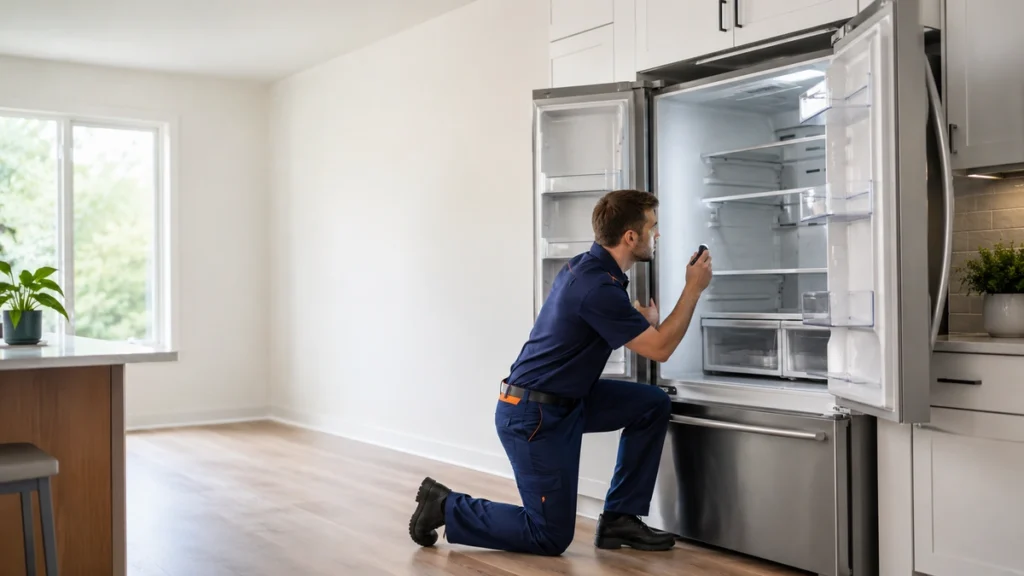
A refrigerator that suddenly stops cooling can turn into a stressful problem very quickly. You may notice that milk is not cold, vegetables are going soft, the freezer feels less frozen than usual, or the refrigerator seems to be running without actually keeping food cool.
Not every cooling issue means the refrigerator has completely failed. Sometimes the problem is caused by blocked airflow, an incorrect temperature setting, a door that is not sealing properly, or dust around the appliance.
Before requesting refrigerator repair help, here are a few safe things Tyler homeowners can check first.
1. Check the refrigerator temperature setting
It sounds simple, but temperature settings can be changed accidentally. This can happen after cleaning, moving items inside the refrigerator, or pressing buttons on the display panel.
For most refrigerators, a normal setting is usually around:
- Refrigerator section: 37°F to 40°F
- Freezer section: around 0°F
If the temperature is set too high, adjust it and allow the refrigerator a few hours to stabilize.
Avoid turning the setting all the way down immediately. Extremely cold settings can sometimes cause frost buildup or make airflow problems more noticeable.
2. Make sure the refrigerator is getting power
A refrigerator light can still turn on even when the cooling system is not working properly. Check whether the display panel is active and listen for normal humming or fan sounds.
You can also check:
- Is the power cord firmly connected?
- Has the wall outlet been switched off?
- Has a breaker tripped?
- Does another small appliance work when plugged into the same outlet?
If you notice a damaged cord, sparks, smoke, or a burning smell, stop using the refrigerator and do not try to inspect electrical components yourself.
3. Check whether the doors are closing properly
A refrigerator door that does not seal properly allows warm air to enter. This makes the appliance work harder and can affect cooling performance.
Look around the rubber door gasket for:
- Cracks or tears
- Food residue or sticky buildup
- Sections pulling away from the door
- A door that appears uneven
- Containers or shelves preventing the door from closing fully
You can gently clean the gasket with warm water and a soft cloth. Once it is clean, close the door and make sure it sits firmly against the refrigerator frame.
A loose seal may seem like a small issue, but it can allow enough warm air inside to affect both cooling and energy use.
4. Make space for air to move inside
Cold air needs room to circulate. If food containers are tightly packed against vents or the back wall, some parts of the refrigerator may stay warm even when other areas feel cold.
Check for:
- Items blocking interior vents
- Large containers pushed against the back wall
- An overcrowded freezer
- Food packed tightly together
- Drawers that cannot close properly
Move food away from visible vents and leave some room between items. If the freezer is cold but the refrigerator compartment is warm, blocked airflow may be part of the problem.
5. Look for unusual frost or ice buildup
Heavy frost inside the freezer can interfere with airflow. It may also point to a door-seal issue or a defrost-related problem.
Signs to watch for include:
- Thick ice on freezer walls
- Frost around air vents
- Ice blocking drawers
- Water leaking after ice begins to melt
- A cold freezer but warm refrigerator section
Do not use knives, screwdrivers, or sharp metal objects to chip away ice. That can damage internal parts and make the issue worse.
If frost keeps returning or the refrigerator is still not cooling after the ice melts, it may be time to request refrigerator repair help.
6. Check around the refrigerator for dust and poor ventilation
Refrigerators need space around them to release heat. Dust, pet hair, and debris can build up around the lower or rear ventilation area and make the appliance work harder.
Depending on the model, the condenser area may be behind the refrigerator or near the bottom.
You can safely check for visible dust around the outside of the appliance. Also make sure the refrigerator is not pushed too tightly against the wall.
Before cleaning around the back or bottom area, unplug the refrigerator if it is safe to do so. Avoid touching wires, coils, or internal mechanical parts.
If the refrigerator feels unusually hot on the outside or runs almost constantly without cooling properly, further inspection may be needed.
7. Pay attention to unusual sounds
Most refrigerators make normal operating sounds. You may hear a light hum, a fan, water movement, or occasional clicking.
However, certain sounds may be worth noting:
- Repeated clicking with no cooling
- Loud buzzing
- Grinding or rattling
- A fan that sounds much louder than usual
- Constant running without cooling
- No sound at all when the refrigerator should be operating
Try to notice when the sound occurs and whether the freezer, refrigerator section, or both areas are affected. These details can be useful when submitting a repair request.
When should you request refrigerator repair help?
- The refrigerator remains warm after several hours
- Food is not staying cold
- The freezer is thawing
- Water is leaking near the appliance
- Frost keeps building up
- The refrigerator is making repeated loud noises
- The unit runs constantly
- You notice an electrical smell, smoke, or damaged wiring
When submitting a refrigerator repair request, include the brand, model number, the symptoms you are noticing, how long the issue has been happening, and any error code shown on the display.
The more detail you provide, the easier it is to review the request and help connect you with appropriate appliance repair assistance.
Need refrigerator repair help in Tyler, TX?
Tyler Appliance Repair Pro helps homeowners request assistance for refrigerator issues such as poor cooling, leaking, frost buildup, unusual noises, and freezer problems.
Use the request form to share your refrigerator brand, model number, and the issue you are experiencing.
FAQs
Why is my refrigerator running but not cooling?
A refrigerator can run without cooling properly because of blocked airflow, temperature-setting issues, dirty ventilation areas, a loose door seal, frost buildup, or an internal cooling-system problem.
How long should I wait after changing the temperature setting?
Allow several hours for the refrigerator to stabilize after adjusting the setting. If it is still warm after that time, another issue may be affecting cooling.
Can dust around the refrigerator affect cooling?
Dust and debris around the ventilation or condenser area can reduce efficiency and make the refrigerator work harder. Cleaning visible exterior buildup may help, but it may not solve internal mechanical problems.