
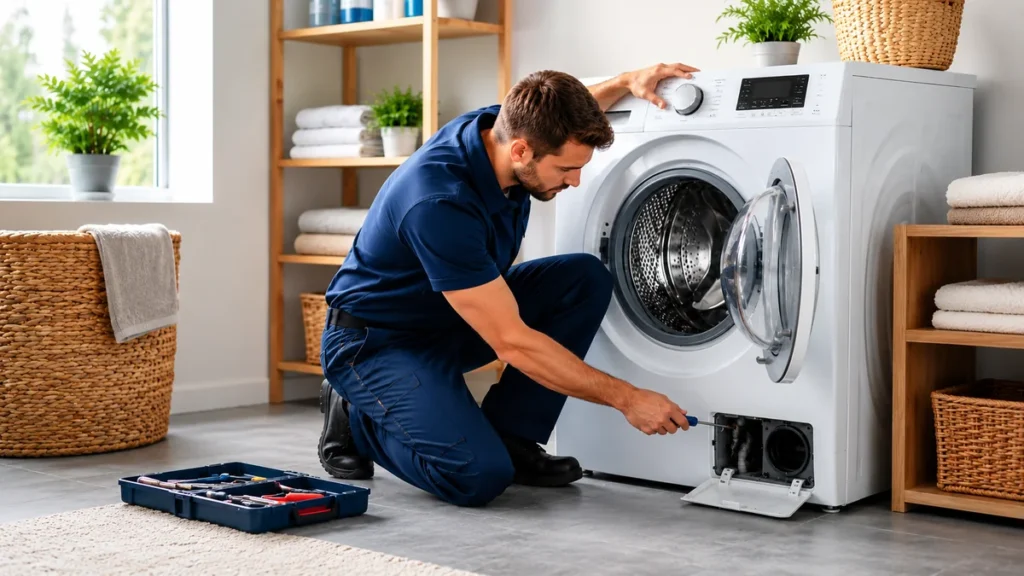
A washer that will not drain can quickly become a frustrating problem. You may open the washer and find standing water inside the drum, wet clothes that feel heavier than normal, or a cycle that stops before the spin stage is complete.
In many cases, a washer drainage issue does not always mean the appliance has completely failed. Sometimes the problem is related to a blocked hose, an overloaded drum, too much detergent, or a drainage area that needs attention.
Before requesting washer repair help, here are a few safe things Tyler homeowners can check first.
1. Check if the washer is overloaded
One of the simplest reasons a washer may not drain or spin correctly is overloading. When too many clothes are packed into the drum, the washer may struggle to balance the load. This can prevent the machine from moving properly into the drain or spin cycle.
Signs of an overloaded washer may include:
- Clothes still very wet after the cycle
- Washer stopping before the spin cycle
- Loud shaking or banging during operation
- Water remaining in the drum
- Clothes packed tightly together
Try removing some items and running a drain or spin cycle again if your washer allows it. Avoid forcing the machine to run with a heavy or uneven load because that can put extra stress on internal parts.
2. Look at the drain hose
The drain hose carries water out of the washer. If the hose is bent, crushed, pushed too far into the drain pipe, or blocked, the washer may not drain properly.
Check the visible hose behind the washer and look for:
- Sharp bends or kinks
- A hose pressed tightly against the wall
- A hose that appears damaged
- Water leaking near the connection
- The hose sitting incorrectly in the drain pipe
Do not pull the washer too aggressively from the wall. If the appliance is heavy or difficult to move, it is better to avoid forcing it.
If the hose looks blocked or damaged, the washer may need further inspection.
3. Check for too much detergent or excess suds
Using too much detergent can create excessive suds. This can confuse some washer sensors and may prevent proper draining or spinning.
This is especially common with high-efficiency washers if regular detergent is used instead of HE detergent.
Signs of excess detergent may include:
- Foam remaining inside the drum
- Clothes feeling soapy after washing
- Washer taking longer than normal
- Drain or spin cycle not completing properly
- A musty smell from detergent buildup
Use the detergent amount recommended for your washer type. More detergent does not always mean cleaner clothes. In some cases, it can make washer problems worse.
4. Make sure the washer door or lid is closing properly
Many washers will not drain or spin if the door or lid is not closing correctly. This is a safety feature. If the washer does not detect that the door is closed, it may pause or stop the cycle.
Check whether:
- The washer door closes firmly
- Nothing is stuck around the door seal
- The lid is fully closing
- The latch area looks damaged
- The washer displays any error code
For front-load washers, also check the rubber door gasket for small clothing items, debris, or buildup. Do not force the door closed if it does not latch normally.
If the washer repeatedly stops and the door or lid lock seems involved, repair help may be needed.
5. Check the drain filter area if accessible
Some front-load washers have a small drain filter or service panel near the bottom front of the machine. This area may collect lint, coins, buttons, hair, or small objects from clothing.
A clogged drain filter can sometimes cause draining problems.
Before checking this area, remember:
- Turn the washer off
- Unplug the washer if safe to do so
- Keep towels nearby
- Water may come out when the filter area is opened
- Do not force any panel open
If you are not comfortable opening the filter area, do not attempt it. A washer can hold standing water, and opening the wrong part may cause water to spill.
If the filter is blocked or the panel does not open easily, it is better to request washer repair help.
6. Listen for unusual sounds during the drain cycle
A washer usually makes some noise while draining. You may hear water moving, a light humming sound, or the drain pump operating.
However, certain sounds can point to a problem:
- Humming but no water draining
- Grinding or rattling
- Repeated clicking
- Loud buzzing
- No sound when the washer should be draining
- Washer stopping suddenly before draining
Try to notice when the sound happens. Does it happen during draining, spinning, or at the end of the cycle? This information can help explain the issue when submitting a repair request.
7. Check whether the washer is spinning
Sometimes the real issue is not just draining. A washer may drain some water but fail to spin properly, leaving clothes soaking wet.
This can happen when the washer is unbalanced, overloaded, or unable to complete the spin cycle.
Signs may include:
- Clothes are wet but little water remains in the drum
- Washer shakes strongly during spin
- Cycle ends but clothes are still dripping
- Washer starts spinning then stops
- Error codes appear during the spin stage
If the washer drains but does not spin, the issue may be different from a simple clogged drain. It may need further inspection.
When should you request washer repair help?
You may want to request help when:
- Water remains inside the washer after the cycle
- Clothes are soaking wet after washing
- The washer will not enter the drain or spin cycle
- The drain hose looks damaged or blocked
- Water is leaking around the machine
- The washer makes grinding, buzzing, or repeated clicking sounds
- The door or lid will not lock properly
- An error code appears on the display
When submitting a washer repair request, include the washer brand, model number, whether it is front-load or top-load, what cycle was running, and whether there is standing water inside the drum.
The more detail you provide, the easier it is to review the request and help connect you with appropriate appliance repair assistance.
Need washer repair help in Tyler, TX?
Tyler Appliance Repair Pro helps homeowners request assistance for washer issues such as draining problems, spin-cycle problems, leaking, unusual noises, and cycle interruptions.
Use our Contact Number to share your washer brand, model number, and the issue you are experiencing.
FAQs
Why is my washer not draining?
A washer may not drain because of an overloaded drum, a blocked drain hose, excess detergent, a clogged drain filter, a door or lid issue, or a drain pump-related problem.
Why are my clothes still wet after the washer finishes?
Clothes may stay wet if the washer did not spin properly, the load was unbalanced, the washer was overloaded, or the machine could not fully drain before the spin cycle.
Can too much detergent stop a washer from draining?
Too much detergent can create excess suds, especially in high-efficiency washers. This may affect the washer’s ability to complete the cycle properly.
Should I open the drain filter myself?
Only open the drain filter if it is easily accessible and you feel comfortable doing it safely. Water may come out, so towels should be nearby. If you are unsure, it is better to request washer repair help.