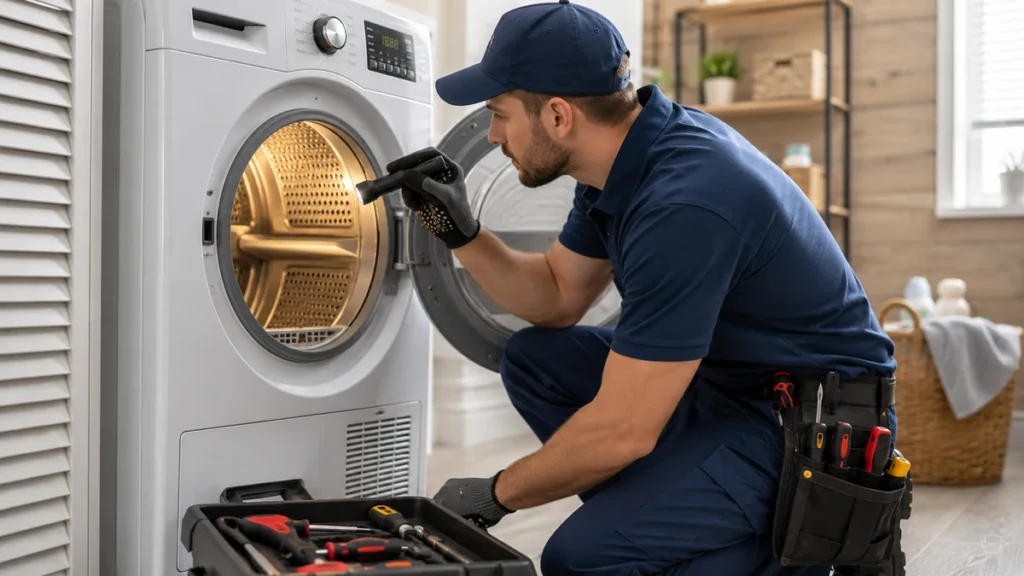
A dryer that is unable to heat will very soon turn into a frustrating experience for you. After running an entire cycle, you might find your clothes wet or cold and even take too much time to dry.
Sometimes, a problem with dryer heating is not indicative of the complete breakdown of the appliance. Instead, this could be because of issues such as airflow problem, lint problem, incorrect setting, overloading the drum or other parts of the dryer.
Here are some things you can check yourself before seeking any help in dryer repairs.
1. Verify the settings on the dryer
The first thing you should verify is the setting on the dryer. Many models have settings for air-dry, fluff, delicate, and low-heat which may not provide sufficient heat. In case the wrong setting is chosen, then even if the dryer works, the clothes will remain wet.
See if:
- The dryer is programmed to operate in a heat cycle
- The air-dry and fluff mode has been disabled
- The temperature setting is not too low
- The cycle has sufficient time to dry clothes
- By mistake, the delicate setting has been chosen
If there is no problem with the settings of the dryer, then the cause might be associated with other factors such as airflow, electricity, or some internal parts.
2. Clean lint trap
If the lint trap is clogged, it will affect airflow and increase stress on the dryer. Poor airflow through the dryer will increase the time that clothes need to be dried.
Always remove lint from the lint trap before every drying cycle. In addition, look for any lint accumulation around the lint trap area.
Symptoms of lint accumulation are:
- Clothes taking a long time to dry
- Very hot exterior of the dryer
- Wet clothes at the end of a drying cycle
- Smell of burning
- Accumulation of lint around the door and lint trap area
Cleaning the lint trap improves airflow.
3. Test the dryer vent
Dryer vents transport hot air laden with moisture outside your home. A blocked or crimped vent or one stuffed with lint may cause malfunction in the operation of the dryer.
Signs of vent-related malfunctions include:
- Moist clothing after running the dryer for the whole cycle
- Dryer becomes hot outside
- Humid laundry room
- Burning or dust odor
- Accumulation of lint around the outside vent
- Appliance stopping work prematurely
Check for a crimped dryer vent if you can see it. In addition, test the outside vent opening if it is accessible.
Try not to pull the dryer forcefully away from the wall. It is important to remember that the appliance may be connected to electricity, gas supply, and a ventilation system.
4. Do not overload the dryer
If the dryer is overloaded, the clothes inside it will not be able to tumble properly. The tight clothes inside will restrict the movement of hot air inside them.
The symptoms of an overloaded dryer are:
- Twisted clothes
- Dampness in specific spots on clothes after drying
- Much longer drying time than usual
- Noise of thumping inside the dryer
- Uneven drying
To see if the dryer is overloaded, try drying a smaller batch of laundry.
5. Make sure the dryer drum rotates
For proper drying, a dryer requires heat as well as motion. Therefore, if the drum of your dryer does not rotate, the clothes will remain wet despite the presence of heat.
See if:
- The drum rotates during the drying process;
- The clothes tumble in a normal manner;
- There is noise of humming but no rotation of the drum;
- The dryer turns on and off instantly;
- The drum feels either stuck or wobbly.
6. Ensure the door closes correctly
Most dryers require the door to be shut in order to function properly. An improperly closing door, a damaged door latch, or an obstructed seal can disrupt the drying cycle.
Determine if:
- The dryer door shuts correctly
- There are no clothes caught in the door
- The latch looks like it has been damaged
- The cycle stops when the door is moved
- The dryer won’t even start
When the door fails to latch correctly, then some repair work might be required.
7. Determine the problem with the electricity
An electric dryer requires sufficient electricity in order to generate heat. An electric dryer might operate properly yet still not heat up because of an electrical problem.
It is easy to tell if:
- The dryer is plugged in correctly
- The circuit breaker has not tripped
- The outlet appears normal
- The dryer screen powers up
- There is a problem with other electrical components
Do not touch the electrical components of the dryer. For any electrical problems, contact a specialist.
Gas dryers are heated with gas which requires a different solution. Avoid repairing anything that has to do with gas.
8. Observe any abnormal odors or sounds
Besides not producing heat, a malfunctioning dryer could also exhibit other signs. These include unusual odors or sounds.
Warning signs include:
- Burning odor
- Loud scraping or grinding
- Clicking
- The dryer overheats externally
- The dryer shuts off before the end of the cycle
- Clothes take more than one cycle to dry
- No heat generation during the heat cycle
In case of any burning smell, shut down the dryer and don’t run another cycle until you address the problem.
When Should You Request Dryer Repair?
You might consider requesting dryer repair services if:
- The dryer doesn’t heat up but runs
- Clothes remain damp even after a complete cycle
- The dryer takes longer than usual
- The drum doesn’t turn
- There are odd sounds coming from the dryer
- The dryer has an odor of burning
- The vent is clean but the dryer doesn’t dry clothes properly
- The dryer shuts off before completing a cycle
- Door or latch malfunctions
For your dryer repair request, you should mention dryer make and model, whether it is a gas or electric, which cycle was used, and whether the dryer heats up at all.
The more information you give, the better we will understand the issue and evaluate the next steps.
Do You Require Dryer Repair Services In Tyler, TX?
Tyler Appliance Repair Pro assists in helping residents to request repair services in case of issues with their dryers like no heat, longer drying times, unusual sounds, poor airflow, drum malfunction, or cycle interruptions.
Fill out the request form and let us know about the problems you have with your dryer, its type, and the preferred communication time.
Frequently Asked Questions
Why does my dryer work but not heat up?
There could be wrong settings, airflow, lint buildup, vent blockage, electrical problem, or one of the heating parts inside the dryer that causes a problem.
Why are my clothes wet even though I just ran a full cycle on the dryer?
This can happen because of overloading of the dryer, clogged lint screen, vent blockage, setting the temperature too low, or problems with airflow.
Can the clogged dryer vent affect the ability of the dryer to heat up?
Yes. This could happen because a clogged vent affects the airflow, which makes drying clothes last longer.
Is it safe to use the dryer if it smells of burning?
No. It is better to stop using it if you notice any burning smell and ask for assistance before starting another cycle.
What information should I give when asking for dryer repair service?
Call Us now and Give the name of the brand, model number, type of the dryer, whether it runs, heats, or stops during the cycle.