If your washing machine is not draining, laundry day can quickly become frustrating. Instead of clean clothes, you may find standing water left inside the drum after the cycle finishes.
In most cases, a problem with the drainage system of a washing machine does not necessarily indicate that the device has broken down. The trouble might be associated with the drain hose, pump filter, lid switch, imbalance of load, or even a clog in the drain line.
Here is what Tyler residents can do before they ask for any assistance with their washing machine repair.
1. Washing Machine Not Draining Because of Overloading
If the washer is overloaded, it might have trouble draining or spinning.
Is it possible that:
- The washer drum is overloaded?
- The clothes that you are going to wash are very heavy?
- The items in the washer are not distributed evenly?
- The items in the washer are evenly distributed?
- The washer stopped working during the spin process?
- The washer has an overload message?
In case your washer is overloaded, take some things out and try to run the draining or spinning process.
2. Drain hose inspection
The drain hose should take out dirty water from your washing machine. In case it gets bent, squeezed or blocked, the water will not come out.
Is it possible that:
- The drain hose is bent or pinched?
- The drain hose is clogged?
- The drain hose is properly attached to the washer?
- The drain hose works well?
- The drain hose is properly placed into the drain pipe?
- There are leaks around the hose?
Try not to push anything into the hose.
3. Cleaning the pump filter
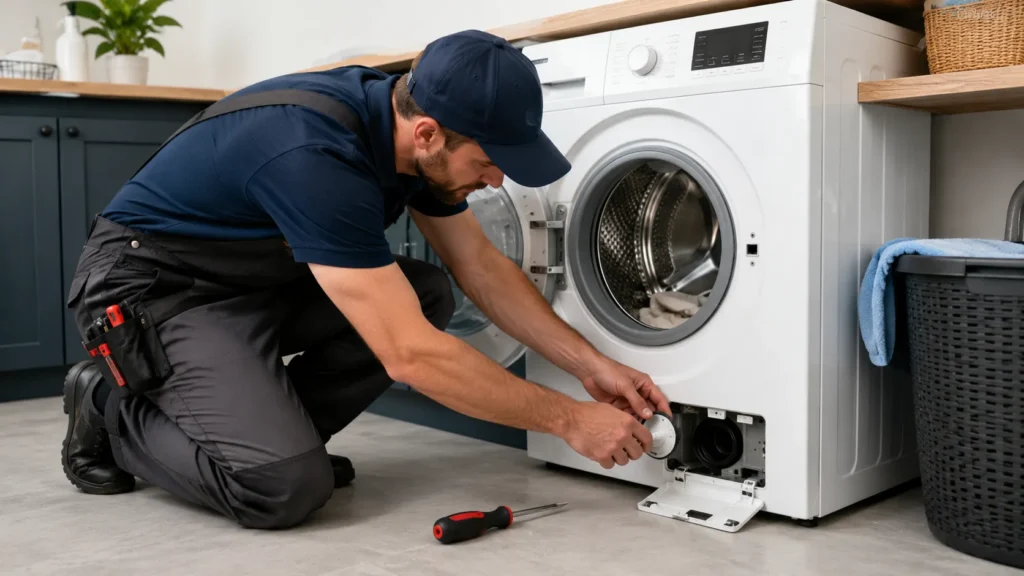
Most front-loading washing machines come with a pump filter which collects lint, coins, buttons and other little bits.
Some indicators might be:
- Water accumulation in the drum of your machine
- Poor draining
- Odor
- Longer-than-usual drain time
- Strange noises while draining
- Drain-related error codes
Remember always to disconnect your machine from electricity source before you open the pump filter and expect some water to drain.
4. Test the household drain
In many cases, the problem might not be in the washer itself – there could be a problem with the household drain.
Test for:
- Water backing up into the laundry sink
- A slow drainage in the standpipe
- Gurgling noises in the drain
- Water overflowing while draining
- Slowness in other household drains
- Unpleasant odors coming from the drain
A plumbing issue might need to be fixed if there are problems with multiple drains.
5. Make sure that the door or lid is fully closed
The majority of modern washers will not drain or spin if the door or lid is not closed properly.
Test for:
- Door or lid closure
- Proper functioning of the door latch
- Door lock function
- Door error on the control panel display
- Cleanness of the rubber door seal
- Anything that prevents closing the door or lid completely
Do not attempt to close the door or lid forcefully if there is something in the way.
6. Pay attention to abnormal noises coming from the pump
Your drain pump should produce a normal running noise while the washer is draining.
Some abnormal signs may be as follows:
- Grinding noises
- Humming but no water is drained
- Clicking sounds
- The pump stops suddenly
- Rattling noises
- There is no pump noise at all
This means that there is probably something wrong with your drain pump.
7. Look for error codes
Nowadays, modern washers show error codes in case of any drainage issues.
See whether:
- You have an error code
- The control panel flashes
- Your washer stops mid-cycle
- The washer does not spin
- Buttons do not work anymore
- The washer keeps restarting
Write down any error code if you notice one.
8. Check for presence of standing water after each wash
Presence of standing water in the washer’s drum after each wash needs to be attended to.
Symptoms include:
- Soaking wet clothes
- Presence of water in the drum
- Failure of the machine to go into spin cycle
- Appearance of odors
- Water leakage on opening the door
- Drainage problems in each wash
Repeated drainage issues can point to a clogged drainage system or pump, or any other part that needs fixing.
When do you need to ask for washing machine repair?
It might be time to ask for washing machine repair when:
- The washer will not drain
- There is still water in the drum
- The spinning does not start
- There are leakage issues
- Noises during draining
- Error codes keep coming
- The drain hose is clear but still has water
- The machine keeps stopping
- Problems with draining even after initial troubleshooting
When requesting assistance, make sure to mention the appliance brand, model, top-load or front-load washer, the kind of draining issue that you have, and error codes, if any.
The clearer your description of the problem, the easier it will be to understand what is wrong and analyze the following steps.
Need washing machine repair assistance in Tyler, TX?
Tyler Appliance Repair Pro assists customers with requesting repair help with washing machine drainage issues, water standing in the drum, drain hose problems, blocked pump filter, strange noises, door lock issues, and other related problems.
Submit your request using the contact form or call us to describe your washing machine problem and specify the appliance and convenient time for contact.
FAQs
Why isn’t my washing machine draining?
A clogged drain hose, blocked pump filter, overloaded drum, faulty lid switch, or damaged drain pump commonly causes a washing machine not draining.
Why is there water left in my washing machine?
Problems with the drain system, a blocked filter, a broken drain pump, or restricted drainage can leave water inside the washing machine.
Can I use my washing machine if it doesn’t drain?
Using the appliance without addressing the problem can cause more harm than good, so it’s better to refrain from operating it.
Why won’t my washer spin after a wash?
Many washing machines will not enter the spin cycle when drainage problems, an unbalanced load, or an unlocked door prevent normal operation.
What information do I need to provide when asking for help with my washing machine?
Tell your technician the brand and model of your washer, if it is a front-load or top-load one, what drainage problem you have encountered, whether there is any water in your drum, and what error code is shown on the display screen.