
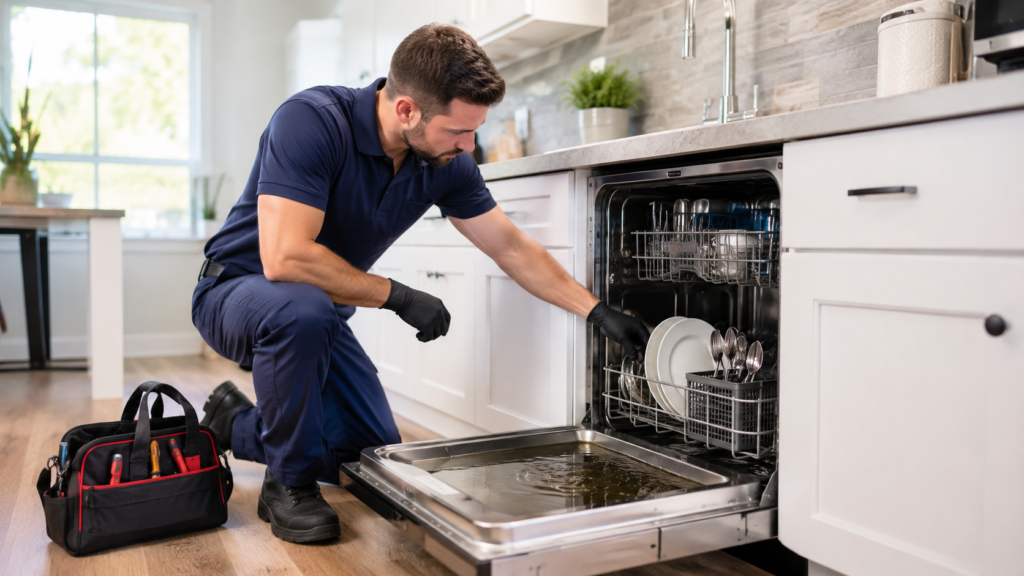
Dishwashers that do not drain are one of the problems that might create stress in the kitchen. The problems can result in opening the dishwasher and finding either water on the bottom of the machine, dirty dishes or an awful smell coming from the appliance.
However, it is essential to note that a drainage problem in dishwashers does not necessarily imply that the appliance has been damaged. In some situations, the problem may be as a result of food particles, filter blockage, blockage of the drain hose or improper loading of the dishes.
The following are some of the easy things to do before asking for help with dishwasher repair by Tyler homeowners.
1. Look for standing water in the dishwasher
Standing water in the bottom of the dishwasher is often a clear sign of drainage issues. The presence of some water in the filter area might be normal; however, a significant amount of water indicates problems with drainage of the dishwasher.
Some of the common signs include:
- Water remaining in the dishwasher after a cycle
- Dirty dishes and dishes that are still wet
- Bad smell emanating from the dishwasher
- Making gurgling noises near the sink drain
- Leaking of water near the dishwasher door
- Stopping of the dishwasher before completion of a cycle
In case there is water remaining in the dishwasher, avoid operating another cycle until the problem has been determined.
2. Cleaning Dishwasher Filter
Some dishwashers come with filters located in the bottom of the tub. The filter prevents particles, grease and any other debris from coming inside while draining. Clogging of the filter can make the dishwasher to drain slowly or retain some water inside it.
Before cleaning the filter,
- Switch off the dishwasher
- Take out the bottom rack
- Find the area at the bottom center of the dishwasher
- See if there is any food particle, grease or debris
- Don’t apply pressure on anything which doesn’t move easily
In case the filter is cleanable, then wash it under the running hot water and take away the debris. Don’t use anything sharp inside the dishwasher as it can damage something inside it.
Dirty filter is the most common problem causing malfunction of dishwasher.
3. Inspect the connection for the garbage disposal
The drainage of the dishwasher can be affected by an issue in the connection for the kitchen garbage disposal, particularly after installation of a new garbage disposal unit.
A clog in the garbage disposal means that the drainage of the dishwasher will be affected.
You should inspect whether:
- The garbage disposal is working fine
- The kitchen sink has poor drainage
- There is an unpleasant odor from the sink area
- The sink becomes filled with water whenever the dishwasher operates
- The disposal has recently been installed
Never insert your hand into the garbage disposal. If there is slow drainage in the sink and disposal, the problem may actually have something to do with the kitchen drain itself.
4. Search for food particles in the dishwasher
Food particles, broken glasses, labels on jars, small pieces of plastic material, among other materials may at times obstruct the drainage area of the dishwasher. Even a tiny piece of material can prevent the drainage of the dishwasher.
Look out for the following in the bottom part of the dishwasher:
- Food particles
- Bones
- Broken glasses
- Plastic materials
- Labels of paper
- Objects obstructing the drainage area
One needs to be extra cautious in case of broken glasses and sharp material in the dishwasher. It is advisable to use protective clothing if necessary.
Avoid pushing any material deeper in the drainage area of the dishwasher.
5. Inspect the drain hose if you see it
The drain hose carries the waste water from the dishwasher to the sink drain or disposal unit. If the hose is bent, crushed, clogged, or improperly installed, the dishwasher may experience drainage issues.
Look for the following signs if the hose is accessible:
- Sharp turns or kinks
- Hose that is squeezed tightly against the dishwasher
- Signs of leaks
- Loose connections
- Backed-up water around the sink
Do not yank the dishwasher. Dishwashers have connections to water lines, drainage system, and electricity; therefore, moving the appliance without precautions may cause additional trouble.
If the hose looks like it needs repairs or cleaning, the dishwasher may need professional repairs.
6. Check whether the dishwasher door closes properly
Some models of dishwashers will not finish the washing process if the door is not closing or locking. When the dishwasher interrupts the cycle too early and stops working, an issue with the door closing may be the reason.
Look for:
- Properly closing door
- No obstructions of the door seal
- Fully inserted racks
- Obstructing dishware or utensils in the door area
- Sudden interruption of the cycle
- Error codes on the display
Do not force the door to close. The latch or the door seal may be damaged.
7. Don’t use too much of the detergent
The excessive amount of the detergent can produce too many foams inside the dishwasher. Excessive foaming can lead to problems with draining and cleaning.
The symptoms of excess foaming are:
- Foaming in the dishwasher
- Residue of the soap on the dishes
- Cloudy glasses
- Slime on the dishes
- Slow draining
- Strong smell of the detergent
Use the required amount of detergent according to the manufacturer’s recommendations. The higher amount of the detergent will not guarantee better results.
8. Listen to strange noises in the drain cycle
There is some normal noise that you may hear in the dishwasher during the draining. It could be the sound of the water moving in the drain hose or light hum. However, some sounds can indicate a problem.
The signs of the problem are:
- Humming but no draining
- Grinding sound
- Buzzing
- Clicking
- Gurgling in the sink area
- Silence in the moment when the dishwasher should drain
You need to pay attention to the time of occurrence of the sound. Is it the washing cycle, drain cycle, or the end of it?
When do you need to ask for assistance with dishwasher repair?
You may need to ask for assistance with dishwasher repair when:
- There is water left after washing
- There are leaks in the dishwasher
- There is no water left, even though the filter is clean
- The sink/garbage disposal clogs when using the dishwasher
- You hear some grinding, buzzing, or clicking sounds coming from the dishwasher
- There is an issue with latching the door
- You see error codes on the display
- Dishes are not washed, even after a full cycle
- The dishwasher stops working before it finishes washing
It would be good to specify the brand of the dishwasher, the model, the symptoms of the problems that occur during the washing process, and whether there is any water in the dishwasher.
If the sink/garbage disposal is clogging while using the dishwasher, you should indicate that as well.
Require help with dishwasher repairs in Tyler, TX?
With Tyler Appliance Repair Pro, you can get help in getting your dishwasher repaired when you experience drainage problem, leakages, inefficient cleaning, noise generation and cycle disruption.
Call now and tell your dishwasher problem, your appliance make and the time that suits you best.
FAQs
Why isn’t my dishwasher draining?
The causes for a dishwasher that isn’t draining include clogged filters, food particles, clogged drain lines, problems with the drain line to the garbage disposal, excessive detergent usage, and issues during the draining process.
Should there be water at the bottom of the dishwasher?
Small amounts of water in the vicinity of the filters are common in some dishwashers. However, if there’s a lot of water present, then this indicates a drainage problem.
Is a clogged garbage disposal preventing my dishwasher from draining properly?
Yes. In case the dishwasher drains into the garbage disposal, and the drain and/or garbage disposal is clogged, it might prevent the dishwasher from draining properly.
Do you recommend running the dishwasher again if there is water present?
No. In case there is water standing in your dishwasher, do not run another full cycle. It increases the risk of leakage and overflow.
What details do I need to provide for help with my dishwasher repair?
The details that you need to provide include the make and model of the dishwasher, problem description, if there is standing water inside, if error codes exist, and if the sink/garbage disposal drains slowly as well.