
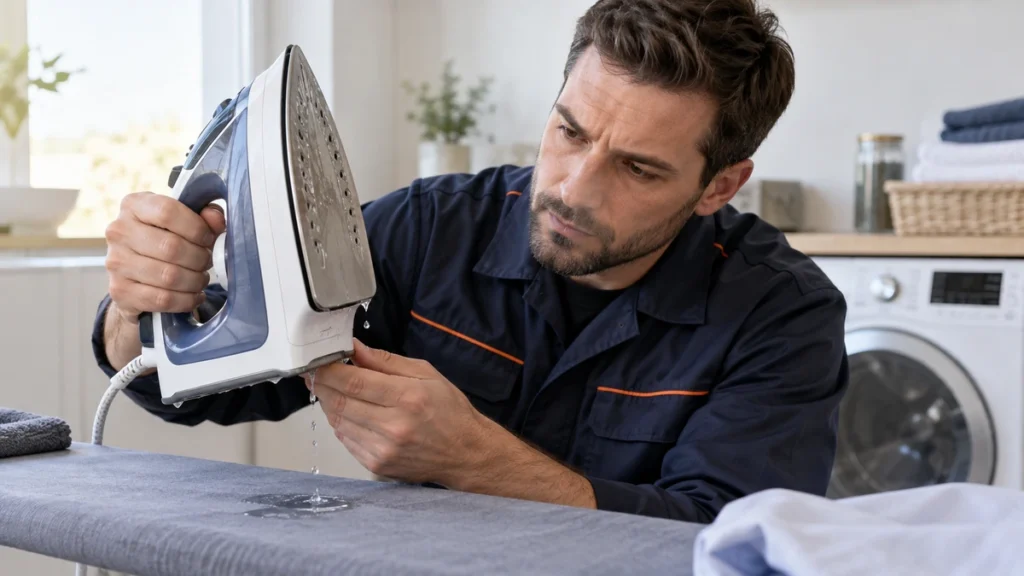
A steam iron leaking water can leave wet spots on clothes, drip from the soleplate, or create a small puddle around the appliance. In many cases, the cause is related to filling, temperature, steam settings, storage, condensation, or mineral buildup rather than a completely failed iron.
Before assuming the appliance needs replacement, Tyler homeowners can make a few simple checks that do not require opening the housing. Because an iron combines electricity, heat, steam, and water, unplug it before filling, draining, cleaning, or inspecting anything beyond the normal controls and removable parts described in the owner’s manual.
Quick Answer: Why Is My Steam Iron Leaking Water?
A steam iron leaking water may be caused by:
- Filling the water tank above the MAX line
- Using steam before the iron is hot enough
- Pressing the steam-boost button too frequently
- Storing the iron horizontally with water still inside
- An improperly closed filling door or cap
- Using unsuitable water, fragrance, or additives
- Mineral buildup or water left after descaling
- Condensation on the ironing board that looks like an iron leak
Start with the safe checks below. If the power cord, plug, housing, water tank, or soleplate is cracked or damaged, stop using the appliance instead of continuing to troubleshoot.
Important Safety Checks Before You Inspect the Iron
Always disconnect the iron from power before filling, emptying, or cleaning it. Allow the soleplate to cool before touching or wiping it, and keep water away from the plug, cord connection, and electrical controls.
Do not remove the iron’s outer housing or attempt to access internal wiring, thermostats, heating elements, pumps, seals, or electrical components. Stop using the iron if you notice a burning smell, sparking, a damaged cord, a cracked water tank, or water entering an electrical area.
1. Make Sure the Water Tank Is Not Overfilled
One of the easiest causes to check is the water level. A steam iron leaking water from the filling area may simply contain more water than the tank is designed to hold.
Place the unplugged iron in the filling position recommended by the manufacturer and look for the MAX line on the tank. If the water is above that mark, pour out the excess.
Philips identifies an overfilled water tank as one possible cause of water leaking from the filling door. Its official steam iron leak troubleshooting guidance also covers several other causes of water coming from the soleplate.
When refilling the iron, add water slowly and stop at or below the manufacturer’s maximum-fill mark.
2. Let the Iron Reach the Correct Temperature Before Using Steam
Steam requires enough heat to turn water into vapor. If steam is selected while the soleplate is still too cool, water may pass through the steam openings before it can properly vaporize.
If your model has a temperature dial, check the owner’s manual for the temperature range in which steam is allowed. Let the appliance heat fully before activating continuous steam or steam boost.
A steam iron leaking water only during the first few moments of use may be related to using steam too early. Philips specifically advises allowing applicable models to reach the correct steaming temperature before releasing steam.
Do not set the iron hotter than the fabric-care label allows simply to stop dripping. Match the temperature to both the garment and the iron manufacturer’s instructions.
3. Avoid Pressing Steam Boost Too Often
The steam-boost function releases a concentrated burst of steam. Pressing it repeatedly within a short period can introduce water into the steam chamber faster than the appliance can convert it to steam.
If droplets appear immediately after several steam boosts:
- Stop pressing the steam-boost button
- Keep the iron in its normal ironing position
- Allow it time to recover heat
- Resume only according to the model’s instructions
Philips lists frequent steam-boost use as one possible reason water droplets can come from the soleplate. If the leak happens only after repeated boosts, changing how often you use the function may solve the problem without any repair.
4. Check the Filling Door, Cap, or Water-Tank Closure
A loose filling door or cap can allow water to escape when the iron is tilted during normal use.
With the appliance unplugged and cool, inspect the normal water-fill opening. Make sure:
- The filling door closes completely
- The cap is seated in its normal position
- No fabric thread or debris is trapped around the closure
- There is no visible crack around the tank or fill opening
Do not force a closure that appears damaged or misaligned. If water escapes through a cracked tank, broken cap, or damaged housing, stop using the appliance.
5. Check How the Iron Is Stored After Use
Storage can also explain a steam iron leaking water after ironing is finished.
Some steam irons can drip when they are stored flat with water left in the tank or when the steam control remains in a steaming position. After the iron has been unplugged and cooled according to the owner’s manual, follow the manufacturer’s instructions for draining and storage.
For models that require it, this may include:
- Emptying remaining water
- Moving the steam control to the dry or no-steam setting
- Storing the iron upright on its heel
- Allowing the appliance to cool before putting it away
Rowenta’s official iron care and use guidance advises selecting the No Steam function before filling certain irons and provides manufacturer-specific maintenance information.
6. Use Only the Type of Water Recommended for Your Iron
Not every steam iron has the same water requirements. Some are designed for tap water, while manufacturers may recommend a mixture involving distilled or demineralized water in areas with hard water.
Check the owner’s manual before changing the type of water you use.
Unless the manufacturer specifically allows them, avoid putting perfume, scented water, starch, vinegar, cleaning chemicals, or descaling products directly into the water tank. Additives can leave residue or interfere with the steam system.
If a steam iron leaking water problem started after using scented or treated water, empty and rinse the tank only according to the manufacturer’s cleaning instructions.
7. Consider Mineral Buildup or Recent Descaling
Minerals from water can accumulate inside steam passages over time. In some situations, scale, residue, or water remaining after a cleaning cycle can come through the soleplate.
Possible signs include:
- Water mixed with white flakes
- Brownish droplets
- Residue around steam holes
- Dripping that started around a descaling cycle
Use only the Calc-Clean, self-clean, or descaling method specified for your exact model. Do not pour household descalers, acids, or other chemicals into the tank unless the manufacturer explicitly approves them.
If the iron continues releasing discolored water or debris after the recommended cleaning procedure, further evaluation may be appropriate.
8. Make Sure the “Leak” Is Not Condensation From the Ironing Board
Sometimes the iron itself is not leaking. Heavy steam can pass through fabric and condense inside the ironing-board cover, eventually creating wet spots that appear to come from the soleplate.
Philips notes that condensation on an ironing board can resemble leakage, particularly when a high steam output is used. The manufacturer suggests reducing steam output when appropriate and checking the condition of the board cover.
If the steam iron leaking water symptom appears only after prolonged steam use, check whether moisture is collecting in the ironing-board padding rather than coming directly from the iron.
Allow the board to dry fully and replace worn padding when necessary.
Where Is the Water Coming From?
The location of the leak can provide a useful clue without opening the appliance.
- Filling opening: check the water level and closure.
- Soleplate steam holes: check temperature, steam settings, boost use, and mineral buildup.
- Water tank: look for visible cracks or damage.
- After storage: review draining, steam-control, and storage instructions.
- Ironing board: consider condensation from high steam output.
Do not keep operating the iron solely to determine the leak location if water is reaching electrical components or the appliance shows signs of physical damage.
When Should a Leaking Steam Iron Be Professionally Checked?
A steam iron leaking water may need further attention when:
- Water continues to leak after the tank level and settings are corrected
- The water tank or housing is cracked
- The filling door or cap will not close properly
- Water appears near the cord connection or electrical controls
- The leak is accompanied by sparking or a burning smell
- Discolored water repeatedly comes from the soleplate
- The appliance leaks every time it heats
- The problem continues after the manufacturer-approved cleaning procedure
If the problem cannot be identified through safe external checks, you can review the available help for clothes iron problems instead of opening the appliance housing yourself.
Information to Include in Your Service Request
Providing clear details can make your request easier to review. Include:
- Iron brand and model number
- Approximate age
- Whether it is a steam iron or steam-generator model
- Where the water appears
- Whether the leak happens during heating, steaming, or storage
- The type of water you normally use
- Whether the iron was recently descaled
- Any unusual smell, noise, discoloration, or electrical symptom
You can submit an online service request with these details so the issue can be reviewed more accurately.
How to Help Prevent Steam Iron Water Leaks
A few routine habits may reduce avoidable leaking:
- Do not fill above the MAX line
- Wait for the iron to reach the proper steam temperature
- Avoid repeated steam boosts in rapid succession
- Use only manufacturer-approved water
- Keep the filling door closed properly
- Follow the recommended descaling schedule
- Empty and store the iron according to its manual
- Keep the soleplate and steam openings clean using approved methods
- Replace worn ironing-board padding when condensation becomes excessive
Always unplug the appliance before filling, draining, or cleaning it.
Need Help With a Steam Iron Leaking Water in Tyler, TX?
If your steam iron leaking water problem continues after these safe checks, avoid opening the housing or attempting internal electrical repairs.
Tyler Appliance Repair Pro helps homeowners request support for clothes iron heating, steam, water-leak, temperature-control, and power concerns. You can request service online and include the appliance model and a description of exactly where the leak appears.
You can also view the areas we serve or call Tyler Appliance Repair Pro at 903-522-5939 to describe the problem.
Frequently Asked Questions
Why is my steam iron leaking water from the soleplate?
Water can drip from the soleplate when the iron is not hot enough for steam, the steam-boost function is used too frequently, mineral buildup is present, or water remains in the steam system after cleaning. Follow the temperature and maintenance instructions for your exact model.
Can overfilling make a steam iron leak?
Yes. Filling above the tank’s MAX mark can cause water to escape from the filling area or other openings. Pour out excess water with the appliance unplugged and refill only to the recommended level.
Why does my iron leak when I first start using steam?
If the soleplate has not reached the temperature required for steaming, some water may pass through before it turns fully into steam. Allow the iron to heat according to the manufacturer’s instructions before activating steam.
Why does my iron drip after I use steam boost?
Using steam boost several times in quick succession may temporarily cool the steam chamber or introduce water faster than it can vaporize. Allow the iron time to recover before using the function again.
Should I empty the water from my steam iron after use?
Storage instructions vary by model, but many manufacturers recommend draining remaining water and storing the iron in the specified position. Check the owner’s manual for your exact appliance.
Can hard water cause an iron to leak?
Hard water can contribute to mineral buildup inside steam passages. Use the type of water and descaling procedure recommended by the iron manufacturer rather than adding unapproved chemicals.
Why is there water on my ironing board?
High steam output can condense inside the ironing-board cover and create wet spots that look like an iron leak. Reducing steam when appropriate and replacing worn board padding may help.
When should I stop using a leaking iron?
Stop using it if water reaches electrical areas, the cord or plug is damaged, the tank or housing is cracked, or the leak is accompanied by sparking, smoke, or a burning smell.